

Identify the target
Define the measurable problem: hardness, sediment, disinfectant taste, lead, PFAS, nitrate, iron, sulfur odor or another specific concern.
Build a treatment plan from a certified laboratory test because private wells are not represented by public-utility reports.
Private-well treatment may require sediment control, iron or manganese removal, softening, pH correction, disinfection, nitrate or arsenic treatment, and point-of-use polishing. The sequence must follow the laboratory evidence.
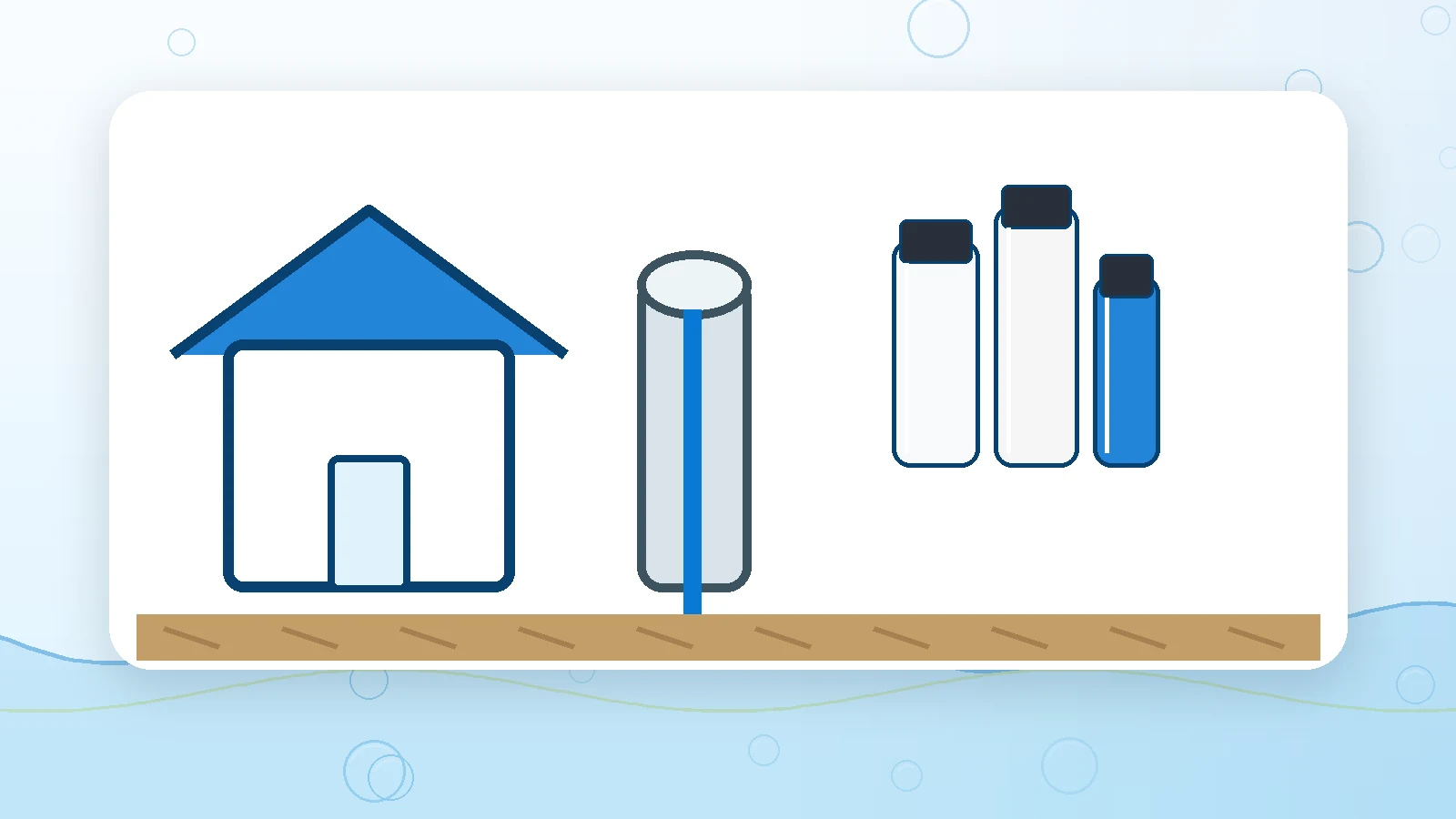
Start with the actual provider or well, current water report, laboratory results when needed, household demand and a model-specific treatment claim. Do not select equipment from a city name, ZIP code or general water-quality headline alone.
NSF/ANSI standards cover different functions. A product can be certified for material safety or a narrow reduction claim without being certified for every contaminant a customer is worried about.
Define the measurable problem: hardness, sediment, disinfectant taste, lead, PFAS, nitrate, iron, sulfur odor or another specific concern.
Check the certification directory, rated capacity, flow, pressure range, replacement interval and test conditions.
A treatment system only performs as designed when cartridges, media, salt, membranes and sanitization are maintained.
Confirm the utility and PWSID, read the newest Consumer Confidence Report, inspect source-water information and review the home's plumbing. A utility report is not a test from the individual kitchen tap.
Find a city provider guide →Begin with a certified laboratory panel appropriate to the well, geology, land use and household risk. Public-utility data do not represent a private well.
Plan private-well treatment →Share the provider or well, current result and the improvement you want. A representative can review system sizing, installation and financing availability.
No. The decision depends on the water source, test evidence, plumbing, flow, pressure and the improvement the household wants.
No. Review the exact standard, model, contaminant-reduction claim, capacity and operating conditions. A brand-level statement is not enough.
Utility reports provide system context, while targeted property testing can answer plumbing, hardness, taste, odor and household-specific questions.
ZeroTrace Water can review professional installation and available financing programs. Financing is subject to third-party approval, rates, terms and service availability.